
Project Mostyn
Planning Case Study
Overview
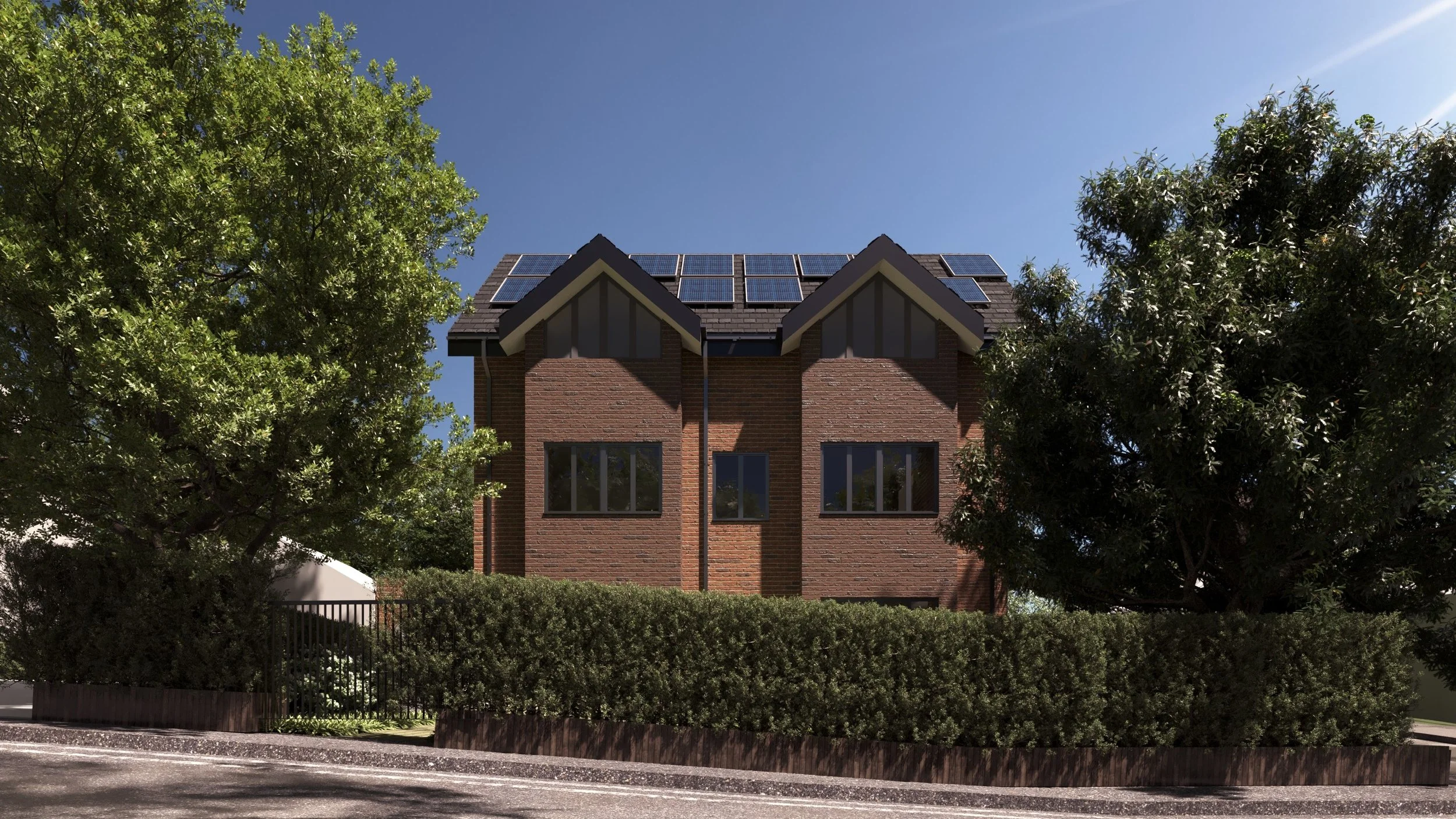
We recently secured planning permission in Croydon for the demolition of an existing detached house and the redevelopment of a corner plot in Coulsdon to provide 6 flats, including 2 family-sized 3-bed homes.
This was a strong result on a site that had already been refused once.
The key point, though, is that the refusal did not knock out the core planning case. The principle of intensifying the site was already there. The broad design approach worked. The relationship with neighbouring properties was broadly acceptable. The refusal was narrower than that and turned on technical matters that needed to be dealt with properly.
So the strategy was not to panic, cut the scheme back for the sake of it, or start again from scratch.
It was to hold onto the parts of the proposal that were right, resolve the refusal points properly, and then push a slow application process hard enough to get the scheme in front of members and over the line.
For more information on our work in the borough, visit our Croydon planning consultant page.
The Site
The site sits on a prominent corner at The Avenue / South Drive, Coulsdon.
That mattered.
This was not a straightforward suburban infill site in a uniform street. It sits at a transition point between lower-density housing on The Avenue and denser flatted development on South Drive. That gave us a strong basis for arguing that a more intensive form of development was appropriate here, provided it was handled properly in design terms.
In other words, this was the sort of site where the right scheme could bridge two different characters. That was one of the central planning opportunities from the outset.
The Planning Challenge
An earlier application had already been refused.
But that refusal was important for what it told us.
The principle of development had not really been rejected. The scheme was not falling over because Croydon thought six homes on the site was absurd in planning terms. The real issues were more technical: ecology, biodiversity net gain, trees, and legal agreement matters.
That distinction is important.
Because once you know a refusal is technical rather than fundamental, the job becomes much clearer. You are not trying to invent a new planning case. You are trying to remove the specific reasons the Council has relied on to say no.
The process then became more awkward when a Tree Preservation Order was served during the application.
Rather than letting that become a derailment point, we engaged directly, met officers on site, dealt with the issue constructively and kept the scheme moving.
Strategic Approach
This scheme succeeded because the strategy was disciplined.
1. Keep the right parts of the scheme
The first decision was not to overreact to the refusal.
Too many schemes get weakened unnecessarily after a refusal because the response is driven by nerves rather than judgement. That was not the right approach here. The core planning case remained sound, so the aim was to keep the density and built form that made sense on this site and fix the points that genuinely needed fixing.
2. Frame the site properly
This corner plot had to be read in context.
From one side, it sits within a looser residential grain. From the other, it sits alongside denser flatted development. So the planning argument was not that this was an isolated exception. It was that this was exactly the sort of transition site where a carefully handled increase in density could be justified.
That is a much stronger argument than simply saying “there are flats nearby.”
3. Deal with the refusal reasons properly
The refusal points were not solved with warm words.
They were solved through updated ecology material, biodiversity information, tree work, and targeted amendments to the scheme. The TPO issue then had to be managed in the same way: directly, constructively and with proper technical follow-up.
That is often the difference on schemes like this. Not drama. Not hand-wringing. Just proper technical work, done at the right time, without losing sight of the wider planning case.
4. Escalate the process strategically
The final part of the job was procedural.
This did not succeed just because we were patient. It succeeded because the process itself was escalated strategically. The application was moving far too slowly, and if left alone it could easily have drifted.
So the strategy became not just about the planning merits, but about forcing movement in the system — including escalation through elected members and MP involvement — until the application finally reached committee.
That is a different skill from writing a planning statement, but on some schemes it is exactly what gets the decision made.
Outcome
Planning permission was secured in Croydon for 6 flats in Coulsdon on a prominent corner plot, including 2 family-sized 3-bed homes.
This was a strong result because:
the site had already been refused once
the refusal reasons had to be dealt with precisely rather than theatrically
a TPO issue arose during the process
and the application still had to be pushed, escalated and carried through to committee before consent was secured
This is a good example of what clients actually pay for.
Not just drawings.
Not just paperwork.
Not just generic planning advice.
They pay for judgement on what to hold, what to fix, and when to push the process itself.
Got a similar site you would like to discuss?
Croydon Planning Permission for 6 Flats: Mostyn, The Avenue / South Drive – 6 Homes Approved At Committee
Project Data
Borough: Croydon
Location: Mostyn, The Avenue / South Drive, Coulsdon
Proposal: Demolition of existing dwelling and erection of 6 flats
Homes approved: 6
Key issue: Earlier refusal overcome through technical work and strategic escalation
Decision: Planning permission secured at committee